10 Most Controversial Moments in Cricket History
Cricket is often described as a gentleman’s game, but its long history has included plenty of heated arguments, controversial decisions, cheating scandals, intense rivalries and moments that divided fans around the world.
Some controversies were caused by players. Others involved captains, umpires, administrators or even the rules themselves. A few incidents were so significant that they resulted in changes to the laws of cricket or permanently altered the reputation of players and teams.
The debate surrounding controversial moments is one reason cricket remains such a fascinating sport. Fans can watch the same incident and reach completely different conclusions.
Was the player technically within the rules? Did the action violate the spirit of cricket? Was the umpire correct? Should technology have been used? And most importantly, did the controversy change the result of the match?
From the infamous Bodyline series of the 1930s to Australia’s Sandpapergate scandal, cricket has experienced controversies across almost every generation.
Here are the 10 most controversial moments in cricket history.
1. The Bodyline Series – 1932-33
Few incidents in cricket history have generated as much controversy as the Bodyline series between England and Australia.
England arrived in Australia with a strategy designed largely to neutralise the extraordinary batting ability of Donald Bradman. England captain Douglas Jardine used fast bowlers Harold Larwood and Bill Voce to deliver short-pitched balls aimed at the bodies of Australian batsmen while placing several fielders on the leg side.
The tactic became known as Bodyline, or “leg theory.”
Although the bowling was not formally illegal under the laws of cricket at the time, the aggressive strategy was considered dangerous and contrary to the spirit of the game. Australian players and officials strongly objected to it.
The controversy became so serious that it created tension between England and Australia beyond the cricket field.
Australian batsmen suffered injuries, and the series became much more than a sporting contest. Diplomatic concerns were reportedly raised between the two countries.
England ultimately won the Ashes 4-1, but the controversy surrounding Bodyline resulted in changes to the laws and fielding restrictions in subsequent years.
The incident remains one of the clearest examples of how a tactical innovation can cross the line between clever cricket and dangerous play.
Why it was controversial: The tactic exploited weaknesses in the rules and deliberately used fast short-pitched bowling to intimidate batsmen.
2. The Underarm Bowling Incident – 1981
The underarm bowling incident between Australia and New Zealand remains one of the most infamous moments in cricket history.
The incident occurred during a World Series Cup match in Melbourne. New Zealand needed six runs from the final delivery to tie the match.
Australia captain Greg Chappell instructed his younger brother Trevor Chappell to bowl the final delivery underarm along the ground.
The reason was simple: an underarm delivery made it virtually impossible for New Zealand batsman Brian McKechnie to hit the six required.
The delivery was legal under the rules at the time.
However, the decision generated enormous outrage because it was considered completely against the spirit of cricket. New Zealand captain Geoff Howarth and many others strongly criticised the Australian approach.
The controversy became so significant that the laws were subsequently changed to prevent teams from using underarm bowling in this situation.
The incident has survived for decades because it illustrates an important difference between what is legal and what is considered fair.
Australia technically followed the rules, but many cricket fans believed the team had abused a loophole.
Even today, the incident is regularly mentioned whenever cricket’s “spirit of the game” is discussed.
Why it was controversial: Australia used a legal tactic specifically designed to make the required six virtually impossible to score.
3. Hansie Cronje and the Match-Fixing Scandal – 2000
The Hansie Cronje match-fixing scandal was one of the darkest moments in international cricket.
Hansie Cronje was one of South Africa’s most respected cricketers and captains. He was considered a leader and role model for a generation of South African players.
That reputation collapsed in 2000 when investigations revealed his involvement with bookmakers.
Cronje admitted receiving money from bookmakers and acknowledged that he had been involved in discussions about manipulating aspects of matches.
The scandal shocked the cricket world because Cronje was not an obscure player. He was the captain of one of the world’s major international teams.
The Delhi Police investigation brought the allegations into the international spotlight, and Cronje subsequently received a life ban from cricket.
The scandal also led investigators to examine the involvement of other players and individuals connected to international cricket.
For fans, the biggest shock was the betrayal of trust.
Cricket depends heavily on the belief that players are competing honestly. Match-fixing attacks that fundamental principle.
The Cronje scandal therefore became a turning point in cricket’s fight against corruption and led to increased attention on anti-corruption procedures.
Why it was controversial: One of international cricket’s most respected captains was found to have been involved with bookmakers and match manipulation.
4. The “Monkeygate” Controversy – 2008
The Monkeygate controversy during India’s tour of Australia in 2008 became one of the most heated player disputes in modern cricket.
The incident involved Indian spinner Harbhajan Singh and Australian all-rounder Andrew Symonds during the Sydney Test.
Symonds alleged that Harbhajan had used a racial slur against him. Harbhajan denied the accusation.
The case became a major disciplinary issue and threatened to overshadow the cricket itself.
Harbhajan was initially given a three-Test suspension after being found guilty of racial abuse, but the decision was later changed following an appeal.
The controversy also created tension between the two teams and raised serious questions about the way disciplinary hearings should handle conflicting player testimony.
The incident was particularly sensitive because it involved allegations of racial abuse.
It became one of the most discussed controversies in the India-Australia rivalry and contributed to already intense emotions surrounding the tour.
Why it was controversial: The players gave conflicting accounts of an alleged racial slur, resulting in a major disciplinary dispute and tension between two cricketing nations.
5. The 2010 Pakistan Spot-Fixing Scandal
The 2010 Pakistan spot-fixing scandal damaged the reputation of Pakistan cricket and became one of the most serious corruption cases in modern cricket.
During Pakistan’s Test against England at Lord’s, television footage appeared to show deliberate no-balls being bowled at specific points in the match.
The subsequent investigation revealed that Pakistan players Salman Butt, Mohammad Asif and Mohammad Amir had been involved in a spot-fixing scheme.
The scandal was especially shocking because Amir was considered one of the most talented young fast bowlers in world cricket.
The players received lengthy bans, and the case eventually resulted in criminal convictions in the United Kingdom.
The scandal demonstrated how bookmakers could attempt to manipulate very specific events within a match rather than necessarily fixing the entire result.
For cricket authorities, it highlighted the growing threat posed by betting markets and the need for stronger anti-corruption systems.
It also left a lasting impact on the careers of the players involved.
Why it was controversial: International players were found guilty of deliberately manipulating specific events in a Test match for financial gain.
6. Sachin Tendulkar and the Ball-Tampering Controversy – 2001
Even the greatest names in cricket have been caught up in controversy.
During India’s 2001 Test series against South Africa, Sachin Tendulkar became involved in a ball-tampering dispute.
Television footage appeared to show Tendulkar working on the condition of the cricket ball. Match referee Mike Denness found him guilty of an offence and imposed a one-Test suspension.
However, the decision created enormous controversy in India.
The Indian team and Indian cricket authorities strongly objected to the way the incident had been handled. The disciplinary process itself became a major issue, and the situation contributed to tensions between the two cricket boards.
Tendulkar maintained that he had been cleaning the ball rather than deliberately tampering with it.
The incident remains controversial because it illustrates how difficult it can be to determine whether a player’s actions are legitimate ball maintenance or illegal alteration of the ball.
It also demonstrates how disciplinary decisions involving superstar players can quickly become international cricket controversies.
Why it was controversial: Tendulkar’s actions were interpreted as ball tampering, while he maintained that he was simply cleaning the ball.
7. The 2018 Sandpapergate Scandal
The 2018 Sandpapergate scandal is one of the most infamous controversies in modern cricket.
During Australia’s Test against South Africa in Cape Town, television cameras caught Australian batsman Cameron Bancroft attempting to alter the condition of the ball using sandpaper.
The incident immediately caused an international uproar.
Bancroft initially tried to conceal what he was doing, but the television footage made the incident impossible to ignore.
Australia captain Steve Smith later admitted that the team’s leadership group had discussed the plan. Smith and vice-captain David Warner were subsequently stood down, while Bancroft was also punished.
Cricket Australia handed Smith and Warner 12-month bans from international and domestic cricket, while Bancroft received a nine-month suspension.
Australia coach Darren Lehmann subsequently left his position after the series, although Cricket Australia’s review cleared him of wrongdoing.
The scandal was bigger than simply a case of ball tampering.
It triggered a major debate about Australia’s cricket culture and the pressure placed on players to win at all costs.
The incident damaged the reputation of some of Australia’s biggest stars and remains one of the defining controversies of the modern era.
Why it was controversial: Players deliberately attempted to alter the ball’s condition and initially attempted to conceal the plan.
8. The 2019 Cricket World Cup Final Overthrow
The 2019 Cricket World Cup final between England and New Zealand is widely regarded as one of the most dramatic matches in cricket history.
It is also remembered for one of the game’s most controversial umpiring decisions.
England needed nine runs from the final three balls. Ben Stokes hit the ball towards the boundary and attempted to complete two runs.
New Zealand fielder Martin Guptill threw the ball towards the wicket. The ball struck Stokes’ bat while he was diving and raced to the boundary.
The umpires awarded England six runs — two completed runs plus four overthrow runs.
However, television replays showed that Stokes and Adil Rashid had not crossed at the moment Guptill released the throw. Under the relevant law, England should have received five runs rather than six. Former elite umpire Simon Taufel later described the decision as a clear mistake.
The extra run was enormous.
England eventually tied the match and then won the Super Over on boundary count, becoming world champions.
The controversy was therefore not simply about an umpiring mistake. It involved a decision that potentially changed the course of a World Cup final.
The incident led to widespread debate about whether the result should have been determined differently.
Why it was controversial: England were awarded six runs when the laws indicated they should have received five, and the match ultimately went to a Super Over.
9. The Mankad Debate
Few topics divide cricket fans as much as Mankading, now commonly referred to as a run-out at the non-striker’s end.
The dismissal occurs when a non-striker leaves the crease before the bowler releases the ball and the bowler removes the bails.
The dismissal is legal under the Laws of Cricket, but it has historically been criticised by some players and fans because it was considered contrary to the “spirit of cricket.”
The controversy reached a new level in 2019 when Ravichandran Ashwin ran out Jos Buttler at the non-striker’s end during an IPL match.
Ashwin’s decision triggered an enormous debate.
Some argued that Buttler was attempting to gain an unfair advantage by leaving his crease early. Others believed the bowler should warn the batter before completing the dismissal.
The incident became particularly important because it reignited the discussion about whether the dismissal should be considered legitimate cricket or unsporting behaviour.
The Laws of Cricket have since changed their classification of the dismissal, removing it from the “unfair play” section and placing it under the run-out law.
That change did not end the debate.
Even today, fans remain divided whenever a player is dismissed in this manner.
Why it was controversial: The dismissal is legal, but many people continue to debate whether it fits the traditional spirit of cricket.
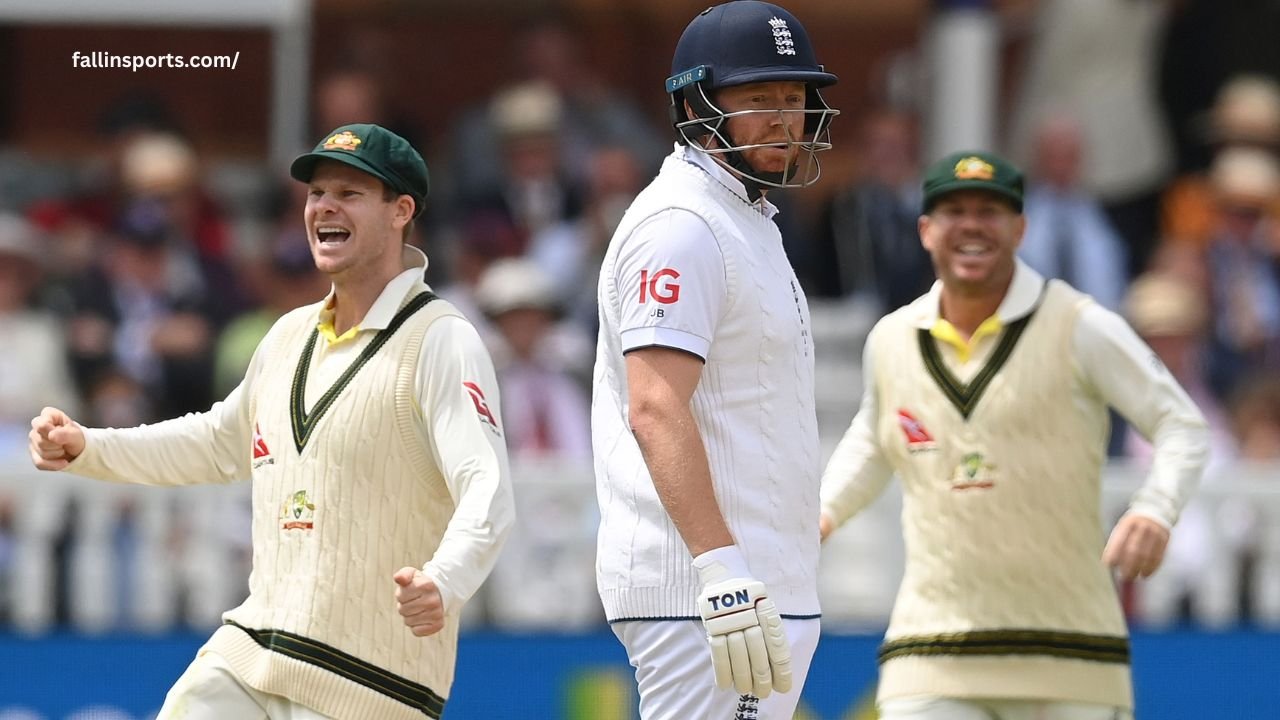
10. The Bairstow Stumping Controversy – 2023
The Jonny Bairstow stumping incident during the 2023 Ashes became one of the biggest controversies in recent England-Australia cricket.
During the second Test at Lord’s, Bairstow wandered out of his crease after believing the ball was dead.
Australian wicketkeeper Alex Carey immediately threw the ball at the stumps and Bairstow was given out.
England argued that the ball was effectively dead and accused Australia of violating the spirit of cricket.
Australia argued that the ball was still in play and that Carey had acted within the Laws of Cricket.
The dismissal was legal, but the controversy quickly became much bigger than the wicket itself.
British Prime Minister Rishi Sunak even commented publicly on the incident, while Australian Prime Minister Anthony Albanese also weighed in. The incident became part of the broader Ashes rivalry.
The debate ultimately centred on one of cricket’s oldest questions:
Should players always follow the letter of the law, or should they sometimes consider the spirit of the game?
The incident showed that this question remains unresolved.
Why it was controversial: Bairstow was legally dismissed, but England believed Australia had violated the spirit of cricket.
Conclusion
Cricket’s most controversial moments are not always its worst moments.
Some controversies have forced the sport to improve its rules. Others have encouraged cricket authorities to strengthen anti-corruption systems, improve umpiring technology and clarify laws.
The biggest lesson from cricket’s history is that winning is important, but how a team wins matters too.
Bodyline showed the dangers of aggressive tactics. The underarm incident demonstrated the difference between legality and sportsmanship. Match-fixing scandals showed how corruption can threaten the integrity of an entire sport. Sandpapergate demonstrated how quickly a team’s reputation can collapse when players cross the line.
Meanwhile, the 2019 World Cup final and the Bairstow stumping proved that even perfectly legitimate cricket decisions can create enormous controversy when the stakes are high.
Perhaps that is why these incidents remain so memorable.
Cricket is not just about runs, wickets and trophies. It is also about traditions, rivalries, emotions, judgment and the constantly changing definition of fair play.
And as long as cricket continues to be played, there will almost certainly be another controversial moment waiting around the corner.