Every generation produces extraordinary players who rewrite the record books, but some achievements are so remarkable that they appear almost impossible to surpass. The modern game has become faster, more athletic and more heavily focused on statistics, yet several historic records remain protected by the enormous difficulty of matching the circumstances in which they were created.
Some records belong to legendary batsmen who played hundreds of international matches. Others belong to bowlers who dominated opponents for more than a decade. There are also team and individual achievements that required an almost perfect combination of skill, endurance and opportunity.
The introduction of T20 cricket has changed the way players approach batting and bowling. International schedules have also become more demanding, while players increasingly specialise in particular formats. As a result, some of the extraordinary longevity required to break older records may become even harder to achieve.
Here are 10 cricket records that may never be broken.
1. Sachin Tendulkar’s 100 International Centuries
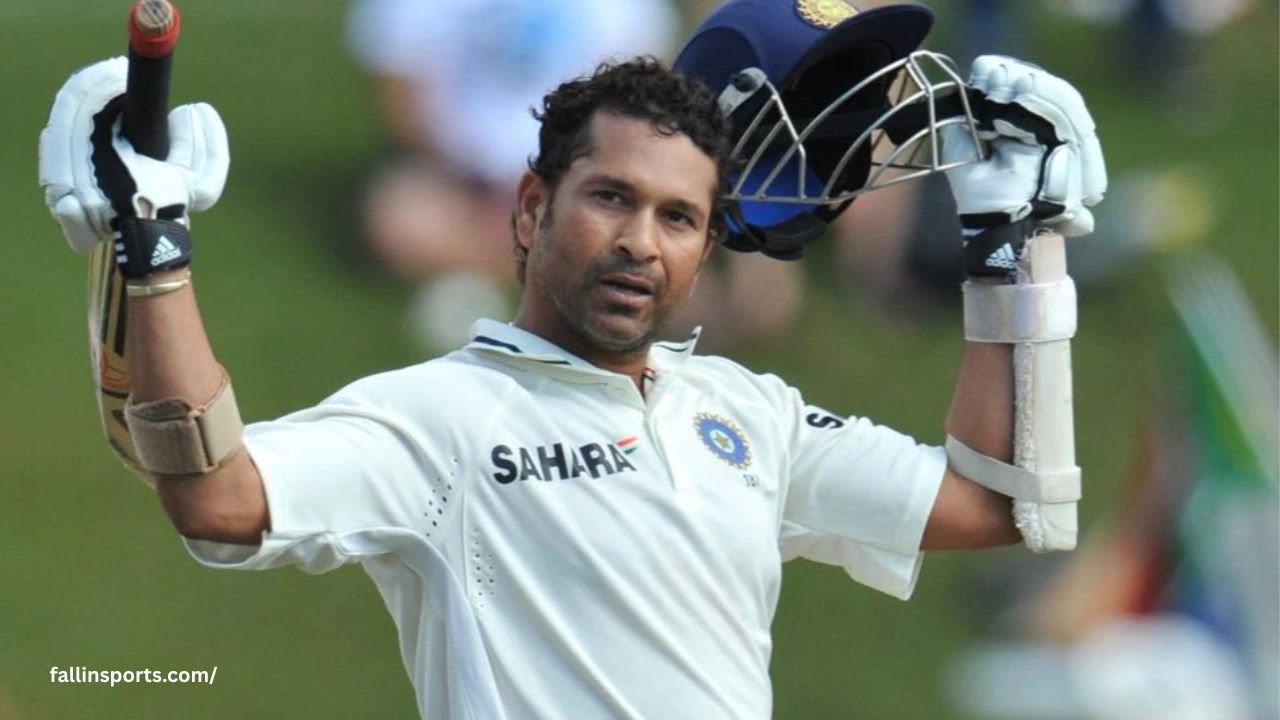
Perhaps no cricket record is more famous than Sachin Tendulkar’s 100 international centuries.
Tendulkar scored 51 Test centuries and 49 ODI centuries, becoming the first and only player to reach 100 international hundreds. (icc-cricket.com)
The achievement required an extraordinary combination of talent, longevity and consistency.
Tendulkar played international cricket for 24 years, representing India from 1989 until 2013. During that time, he faced some of the greatest bowlers of several generations.
Scoring a century is difficult enough. Doing it 100 times at international level is almost unimaginable.
Modern cricketers also face a major obstacle when attempting to challenge the record: format specialisation.
Players increasingly focus on one or two formats rather than playing every international match. T20 leagues also take up significant portions of the cricket calendar.
Virat Kohli became the next player to reach the 80-century mark across international cricket, but the gap to 100 remains enormous. (icc-cricket.com)
Why it may never be broken: A player would need extraordinary longevity while maintaining elite batting standards across multiple formats for two decades or more.
2. Muttiah Muralitharan’s 1,347 International Wickets
Sri Lankan spin legend Muttiah Muralitharan finished his international career with an astonishing 1,347 wickets across Tests, ODIs and T20Is.
He remains the highest wicket-taker in international cricket history by a huge margin. (guinnessworldrecords.com)
Muralitharan’s Test career alone produced 800 wickets, while he collected 534 wickets in ODIs.
The longevity required to reach those numbers is almost impossible to replicate.
A modern bowler would need to play hundreds of international matches while remaining fit, effective and selected across multiple formats.
The workload is another problem.
Fast bowlers face enormous physical demands, while spinners are increasingly rotated and rested because international cricket and franchise tournaments have become so busy.
Muralitharan’s career lasted nearly two decades and included countless long spells and demanding tours.
The record is therefore about more than bowling ability.
It represents an extraordinary combination of durability, skill and opportunity.
Why it may never be broken: Reaching 1,347 international wickets would require an enormous number of matches and an exceptionally long career at the highest level.
3. Brian Lara’s 400 Not Out in Test Cricket
Brian Lara’s 400 not out against England in 2004 remains the highest individual score in Test cricket.
The West Indies legend spent more than 12 hours at the crease at Antigua and produced one of the most extraordinary innings in the history of the sport.
Lara eventually finished unbeaten on 400 from 582 balls, including 43 fours and four sixes.
What makes the record particularly remarkable is the fact that Lara had previously held the Test record with 375, scored against England in 1994.
He then broke his own record a decade later.
Modern Test cricket is increasingly fast-paced, and teams often declare earlier in an attempt to force a result.
That makes enormous individual scores more difficult.
A batter may reach 300 and still not have enough time to continue toward 400 before the captain decides to declare.
Why it may never be broken: Scoring 400 requires extraordinary concentration, physical endurance and enough time at the crease, something modern Test tactics may increasingly discourage.
4. Rohit Sharma’s 264 in ODI Cricket
Rohit Sharma’s 264 against Sri Lanka remains the highest individual score in men’s ODI cricket.
The Indian opener produced the remarkable innings in Kolkata in 2014.
Rohit faced 173 deliveries and smashed 264 runs, including 33 fours and nine sixes.
What makes the record extraordinary is the sheer volume of runs produced in a single ODI innings.
Rohit’s innings accounted for more than half of India’s total score.
The closest challengers have included other explosive batsmen, but breaking 264 requires an extraordinary combination of power, timing and endurance.
Modern ODI cricket does provide opportunities for huge scores, especially with batting-friendly pitches and fielding restrictions.
However, a player still needs to survive for a very long time while maintaining an exceptional scoring rate.
Even a small mistake can end the innings.
Why it may never be broken: A batsman needs to remain at the crease for almost an entire ODI while scoring at an extraordinary rate.
5. Jim Laker’s 19 Wickets in a Test Match
In 1956, England’s Jim Laker produced one of the greatest bowling performances in cricket history.
Playing against Australia at Old Trafford, Laker took 19 wickets in the match.
He took 9 wickets in Australia’s first innings and then returned with 10 wickets in the second innings, becoming the first bowler to take all 10 wickets in a Test innings.
Australia were eventually bowled out for just 84 in the second innings.
Laker’s final match figures were 19 wickets for 90 runs.
The record has survived for decades.
Taking 19 wickets in a Test match requires almost complete domination over an opposition batting lineup.
The modern game also makes the achievement harder because teams generally have more defensive strategies and improved batting techniques.
A bowler would need to take almost every wicket available to them while avoiding significant competition from their teammates.
Why it may never be broken: A bowler would need to take 19 of the 20 opposition wickets in a single Test match.
6. Chaminda Vaas’ Four Wickets in the First Four Balls of an ODI
Sri Lankan fast bowler Chaminda Vaas produced an extraordinary opening spell against Bangladesh during the 2003 Cricket World Cup.
Vaas took a wicket with each of the first three balls of the match and then claimed another wicket with the fourth delivery.
He became the first bowler in ODI history to take four wickets from the first four balls of an innings.
The opening sequence was:
- Wicket
- Wicket
- Wicket
- Wicket
It was an extraordinary display of swing bowling.
The probability of taking four consecutive wickets at the beginning of an ODI is extremely low.
Even the greatest bowlers struggle to produce four wickets in four deliveries, let alone at the beginning of a major international match.
The record is technically possible to equal, but its rarity makes it one of cricket’s most remarkable statistical achievements.
Why it may never be broken: Four consecutive wickets from the opening four deliveries require almost perfect bowling combined with extraordinary circumstances.
7. Lasith Malinga’s Four Wickets in Four Balls in World Cup Cricket
Lasith Malinga produced one of the most spectacular spells in World Cup history when he took four wickets in four consecutive deliveries against South Africa in the 2007 tournament.
Malinga’s unusual sling-arm action and pinpoint yorkers made him one of the most difficult fast bowlers to face.
He became the first bowler to take four wickets in four balls in an international cricket match.
The achievement was especially impressive because it came during a World Cup, where pressure is enormous.
Malinga later became famous for his death bowling and ability to produce yorkers at will.
Although four wickets in four balls has been achieved more than once in cricket, doing it in a World Cup remains extremely rare.
Why it may never be broken: Matching the achievement requires four consecutive wickets, while doing it on the World Cup stage requires extraordinary pressure-handling ability.
8. England’s 498/4 – The ODI Team Score Record
England set a remarkable ODI record when they scored 498 for 4 against the Netherlands in 2022.
The innings was a spectacular demonstration of modern attacking cricket.
England’s batsmen attacked from the beginning, producing a huge total that seemed almost impossible only a few years earlier.
The score demonstrated how dramatically ODI batting had evolved.
However, breaking the record is not impossible.
Modern batting-friendly pitches, powerful bats and aggressive approaches mean teams are increasingly capable of scoring 400-plus totals.
Yet reaching 500 in an ODI still requires an extraordinary performance.
A team needs multiple batsmen to contribute heavily while maintaining an exceptional scoring rate for the entire innings.
The record may eventually fall, but reaching 500 or more remains one of the hardest team achievements in cricket.
Why it may never be broken: It requires almost every aspect of an ODI batting innings to go perfectly for 50 overs.
9. Yuvraj Singh’s Six Sixes in One Over
One of the most iconic records in T20 cricket belongs to Yuvraj Singh.
During the 2007 ICC T20 World Cup, Yuvraj smashed six sixes in one over against England’s Stuart Broad.
The six balls produced six consecutive maximums.
It was an extraordinary demonstration of power and confidence.
The moment became one of the defining images of the first T20 World Cup.
The achievement has since been matched in international cricket, but it remains incredibly rare.
A bowler only has six legal deliveries in an over, meaning a batsman has precisely six opportunities to hit six sixes.
Even in modern T20 cricket, where batters are encouraged to attack, achieving six consecutive maximums requires extraordinary timing and power.
Why it may never be broken: Six legal balls mean six maximum scoring opportunities — there is no higher possible number of sixes in a single over.
10. Wilfred Rhodes’ 4,204 First-Class Wickets
Perhaps the most difficult record on this list to imagine being broken belongs to Wilfred Rhodes.
The English all-rounder took an incredible 4,204 wickets in first-class cricket.
Rhodes’ career lasted an astonishing 32 years, during which he played more than 1,100 first-class matches.
His longevity was extraordinary even by the standards of his era.
Modern professional cricketers simply do not play anywhere near that many first-class matches.
International cricket, franchise leagues, travel, fitness management and shorter formats have transformed the professional game.
A modern player would need to play an enormous number of matches over several decades to even approach Rhodes’ record.
The number therefore represents not simply bowling ability but an entirely different era of cricket.
Why it may never be broken: Modern players play fewer first-class matches and rarely maintain professional careers for three decades.
The Most Unbreakable Record?
If we had to choose just one record that may genuinely never be broken, Sachin Tendulkar’s 100 international centuries would be one of the strongest candidates.
The number itself is incredible, but the circumstances make it even more difficult.
A player would need to score centuries consistently across Tests and ODIs while playing international cricket for roughly two decades.
Similarly, Muttiah Muralitharan’s 1,347 international wickets may remain untouched because modern players rarely play enough matches across all formats to accumulate such a huge total.
And Don Bradman’s 99.94 Test average could be even more difficult to challenge because it represents extraordinary performance over a long career.
Final Ranking
Our list of 10 cricket records that may never be broken is:
- Sachin Tendulkar – 100 international centuries
- Muttiah Muralitharan – 1,347 international wickets
- Brian Lara – 400 not out in Test cricket
- Rohit Sharma – 264 in ODI cricket
- Jim Laker – 19 wickets in a Test match
- Chaminda Vaas – Four wickets in the first four balls of an ODI
- Lasith Malinga – Four wickets in four balls in World Cup cricket
- England – 498/4 in ODI cricket
- Yuvraj Singh – Six sixes in one over
- Wilfred Rhodes – 4,204 first-class wickets
Conclusion
Cricket’s record books are filled with extraordinary achievements, but some numbers stand above the rest.
Sachin Tendulkar’s 100 international centuries, Muttiah Muralitharan’s 1,347 wickets, Brian Lara’s 400 not out and Jim Laker’s 19 wickets in a Test match represent achievements that required exceptional talent combined with extraordinary circumstances.
Modern cricket may eventually produce players capable of challenging some of these records.
After all, cricket has repeatedly surprised fans.
Records that once appeared impossible have eventually fallen.
But that is what makes cricket statistics so fascinating. Every generation produces a new superstar who attempts to rewrite history.
For now, however, these records remain towering achievements — and some may stay in the record books for generations to come.